
Full text:
*By Alexander Larman*
Published 28 April 2026 11:24am BST
Under normal circumstances, Desert Warrior, a $150m (£111m) desert-set period epic, might be expected to be one of 2026’s biggest and most eagerly awaited releases. It stars the new Captain America himself, Anthony Mackie, with a supporting cast including Ben Kingsley, Sharlto Copley and British actress Aiysha Hart, and directed by Rise of the Planet of the Apes’s Rupert Wyatt.
Instead, it has become one of the year’s biggest flops. Despite being released in more than 1,000 cinemas in the United States, it only made $472,000 in its opening weekend – the worst opening for a major film this year and one of the worst in history – and has been heavily criticised by both critics and cinemagoers alike.
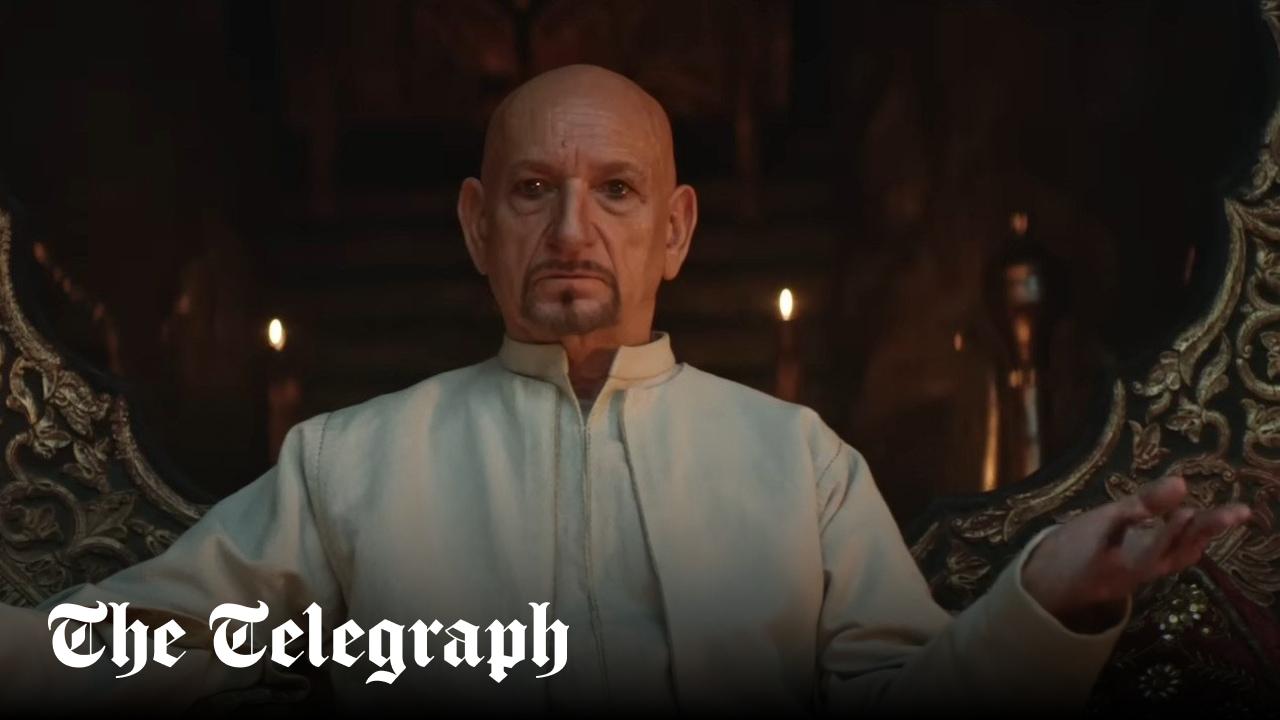
At the time of writing, it has a diabolical score of 1.9 out of 10 on IMDB, which is lower even than the much-derided Cats (2.8/10). Typical comments from the few who have seen it criticised what is seen as its Western-centric perspective on a decidedly Arabian story; anachronistically diverse casting; and even – disastrously given the current US-Iran conflict – anti-Persian sentiment, best expressed by the cast of rent-a-baddie Kingsley as the villainous Emperor Kisra. The message is clear: Desert Warrior is fatally wounded.
There is more to its flop status than simply being a harsh judgment on a poor film. Its total failure means that its intended existence – as the high-profile launch project for Saudi Arabia’s expensively funded nascent film industry – might see that plan come a significant cropper. And the studio that the film was meant to be showcasing was itself riddled with controversy from inception.
Flash back to late 2020, and the announcement for Desert Warrior made it sound like an exciting project. Mackie was a star on the rise, even before he became the new Cap. Also featuring the up-and-coming Hart as well as screen veterans Copley and Kingsley, it looked like being an unusually cerebral and interesting project of a kind barely attempted since David Lean headed out into the desert six decades before to make Lawrence of Arabia. That film was, of course, an Oscar-winning classic that made a star out of Peter O’Toole, but its tortuous, troubled production nearly killed its cast and director: filming in the desert, miles away from civilisation, took its toll on everyone. Lessons should have been learnt.
Wyatt intended to make Desert Warrior his own contemporary version of a historical epic, set in 7th-century Arabia and recreating the legendary Battle of Ze Qar – complete with hundreds of extras, rather than just the usual CGI masses. It was not funded by Hollywood, but instead by MBC studios, an offshoot of Saudi’s largest and wealthiest broadcaster, MBC. Established in 1991 by the businessman Waleed bin Ibrahim, it has enjoyed success in the region for decades, but wanted to raise its game by moving into the film business.
It helped that its majority shareholder, the nation’s ruler, Crown Prince Mohammed bin Salman, is said to be a film buff who wants to take on Hollywood at its own game. To this end, the Saudi Film Commission has sought to undercut its neighbours Egypt and Morocco by offering considerable incentives to film-makers: a 40 per cent rebate on expenditure solely committed to the area, as opposed to the industry standard of 30 per cent. These pictures were to be filmed at Neom Media, a new and hugely expensive studio in Saudi Arabia’s $500bn “smart city” calling itself “the land of the future, where the greatest minds and best talents are empowered to embody pioneering ideas”.
The first Western-centric movie to be filmed and financed in Saudi Arabia was the 2023 Gerard Butler thriller Kandahar. It was not a huge success, but the generous rebate meant that a large proportion of its costs were absorbed even before release. Considerably more was riding on the success of Desert Warrior. Not only did it have a far bigger budget, but its combination of Western, A-list film-makers and Saudi locations and financing could have led to one of two outcomes: a fruitful collaboration between East and West or a disastrous clash of cultures.
Perhaps unsurprisingly, the latter ensued. “The film was very challenging to make, the hardest of my career,” said producer Jeremy Bolt. “We were shooting a battle-orientated period epic in beautiful-but-harsh desert locations. There was nothing there: no infrastructure, no crew and no equipment. We had to bring everything in, and often from other countries.” The efforts of all involved, he said, were “herculean”.
Much the same, of course, could have been said of Lawrence of Arabia, but that film at least had the wholehearted support of King Hussein for the scenes filmed in Jordan. However, Desert Warrior proved far more problematic. It was made clear by MBC that the picture had to be shot in Saudi rather than the initially suggested (and more convenient) Dubai, which presented huge logistical problems. As Wyatt told film magazine Screen International last year: “We ultimately found an area in north-west Saudi Arabia, right near the Jordanian border, called Tabuk. It had amazing infrastructure for living but not for film-making – there was no film-making infrastructure there at the time.”
Eric Hedayat, Desert Warrior’s American executive producer, has said: “It was hundreds of crew, thousands of extras, horses, camels, chasing and fighting in the desert.” Despite having Neom’s vast resources at the producers’ disposal, the shoot proved tricky. Production was not only delayed by Covid, with the film eventually being shot between September and Christmas 2021, but it used what Hedayat called “an insane number of pick-up trucks” to transport filming equipment, cast and crew, and the horses and camels needed for the huge battle scenes. Giant fans were deployed so the crew could use their sweltering hotel car park as a makeshift set. Vital equipment ended up stuck at Saudi border control, roads were built in the desert to transport vehicles, and crew had to be flown in from all over the world because of the absence of skilled local technicians.
It swiftly became clear that, with 49C heat, a multinational cast and crew and hundreds of extras, the film-makers had taken on a remarkably challenging project. “For all intents and purposes, we were totally on our own – no one had ever tried to make a film like that,” said Wyatt. “We brought everything in, and we ended up with about 40 different nationalities working on the film.” None of this came cheap. The original budget of $140m crept up, although MBC claim that the final cost was around $150m.
More problems came during a prolonged post-production process that saw Wyatt removed from the editing room altogether. It was suggested that he had tried to make a nuanced epic drama with a two-and-a-half-hour runtime, and that MBC, believing that this was not commercially viable, had panicked, fired him and tried to turn it into a more conventional two-hour action movie – a kind of Middle Eastern Braveheart – at the expense of narrative coherence.
Wyatt tactfully commented that it was “challenging”, especially after his main point of contact left MBC. “There were obviously some cultural thoughts and considerations [MBC] wanted to take into account. But in my opinion, as a white male person not from that region and not from that culture, the whole intention of the film, because we made it in English, was to make a human story.”
Whether by his own decision or because he was fired, Wyatt left the film – only to be rehired 18 months later. The final film, then, is Wyatt’s cut, but done amid considerable compromise and uncertainty from the production company, and the film’s lukewarm reception is testament to this. As industry publication The Hollywood Reporter caustically observed, “It’s easy to get the feeling that Desert Warrior is designed as much to show off the impressive locations and Saudi Arabian production values as to tell a compelling historical story.”
In 2024, Hollywood news outlet Deadline reported that a test screening had gone so badly that Desert Warrior might never see the light of day. Feedback from the preview was that “confusion loomed large”. And in a scene where another woman lightly touches Hart on the back of the neck in an intimate way, cultural controversies arose. As one anonymous insider told Deadline, “The Arabs were not [enthusiastic] about that.” Modernisation in the region has only gone so far. And following industry screenings, according to a report in entertainment magazine Vulture, the producers were told repeatedly: “There’s no audience for this movie after the Israel-Hamas war.”
The film was released to little fanfare in the US, with no promotional appearances from anyone involved; there’s no sign of a UK release date. But MBC has no intention of limiting its ambitions. Aiming towards the state-funded Saudi Arabia Vision 2030 project (which is rumoured to make alcohol available to Westerners, among other things, thereby making the idea of lengthy periods of filming more palatable), more film studios have been built, including PlayMaker, Jax and the state-of-the-art AlUla Studios – all intended to fulfil the state’s vision of 100 films being shot in the region by 2030. Hollywood producer Erik Feig has started a new Saudi-backed production company, Arena SNK Studios, that has a billion dollars’ worth of funding and is intended to make as broadly commercial projects as possible that will appeal to an international audience.
Despite the offer of rebates and the cutting-edge facilities, it seems unlikely that the region will be playing host to the new Marvel or Christopher Nolan productions any time soon. The highest-profile film is another period action epic, Unbroken Sword, from Game of Thrones director Alik Sakharov and focusing on another 7th-century Arabic saga, following the legendary general Khalid ibn al-Walid. It may be popular with a local audience, but the chances of it threatening the new Avengers film for box office supremacy in the US are extremely low.
It has not helped Saudi’s status as a Hollywood-friendly destination that Neom itself has long been mired in controversy. When several workers died during construction, Wayne Borg – the Hollywood executive hired to run the studio – allegedly called them “f—ing morons” and sighed, “That is why white people are at the top of the pecking order.” Borg, who subsequently left, was in good company. Neom’s former chief executive Nadhmi al-Nasr reportedly boasted, “I drive everybody like a slave”, a comment that many seem to have taken literally. He has also left the project.
Not only is the Saudi film industry unlikely to become the new Hollywood, but it might not even rival the likes of Bollywood or Nigeria’s Nollywood for local reach. The Crown Prince’s vision of the future is fast becoming a mirage.
by AGOTFAN
1 Comment
I had no idea that Desert Warrior was a movie that already came out, let alone that Anthony Mackie starred in it.