
In the first movie, Anne Hathaway’s Andrea Sachs is an aspiring journalist and fish-out-of-water who scores a job at a fictional fashion magazine called Runway, only to butt heads with its icy and manipulative editor-in-chief, Miranda Priestly.
In the sequel, Miranda and the rest of the Runway world are grappling with the transition from print to digital media, declining advertising revenue, leadership changes, and the fight for attention in an algorithm-driven online world.
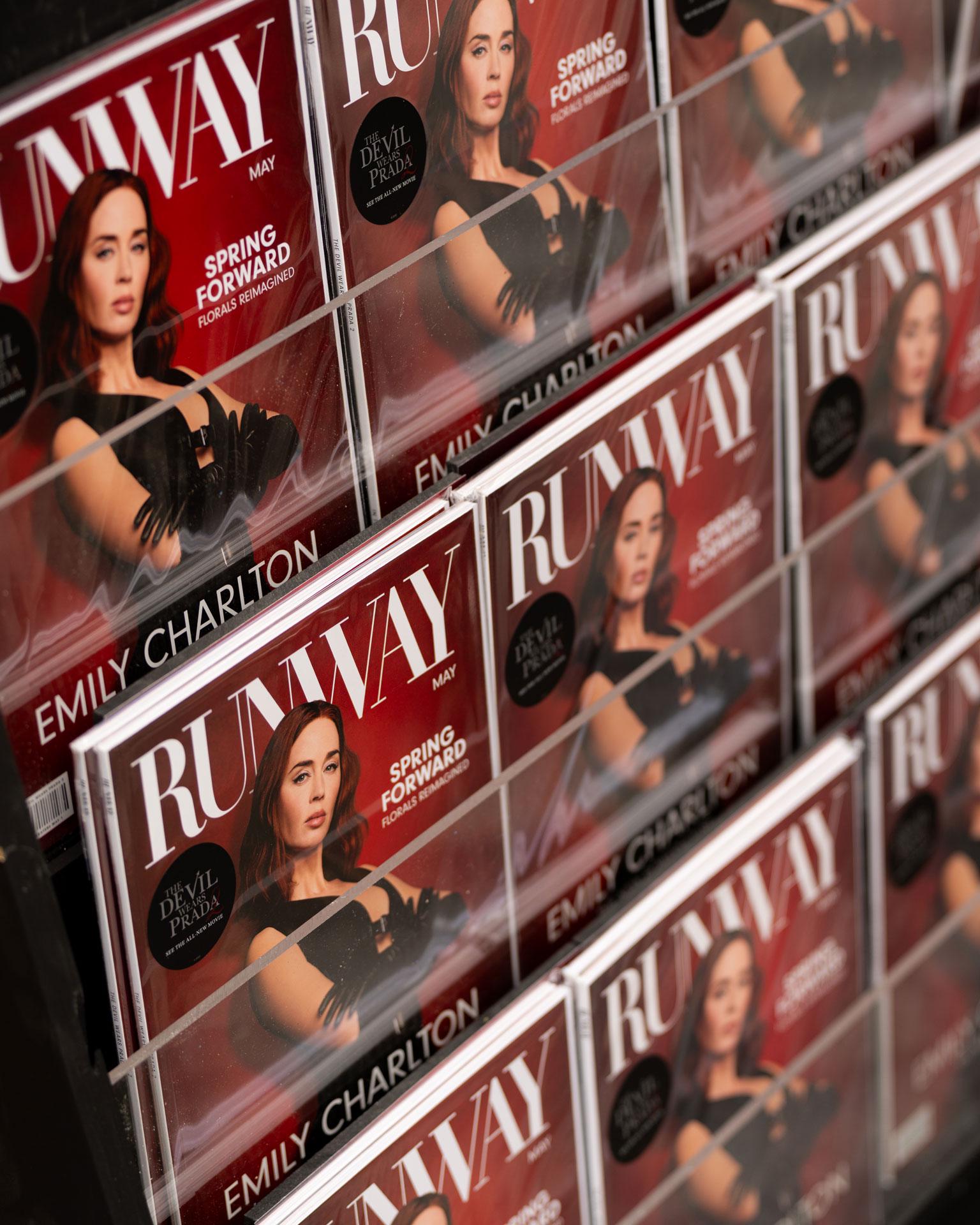
One of the biggest marketing stunts from The Devil Wears Prada 2 campaign is the limited-edition fictional Runway magazine the team created that was handed out not only at the premiere, but at the various L’Oreal Paris, Grey Goose, and other branded pop-up newsstands in Los Angeles and New York.
The magazine—which features Emily Blunt’s Emily Charlton on the cover—is full of editorial features, ads promoting the brand partnerships, and fashion taken from the sequel.
There’s even an “editor’s letter” from Miranda and articles written by Andrea, but all the contributors are actual fashion designers, artists, and creators the studio partnered with. (Disney declined to disclose the marketing budget for the sequel.)
“It felt like we had to meet the mark as we were going to make our own Runway magazine,” Martha Morrison, head of marketing at Disney Entertainment, Studios said. “A lot of effort and care was put into making sure that it matched what people’s expectations are of what they would get if they had a real Runway magazine in their hands.”
by _fastcompany
4 Comments
https://preview.redd.it/zzwz6bu7ccyg1.jpeg?width=640&format=pjpg&auto=webp&s=9236e4eba4a4b2bed75fdd1f4e084188a654ec8c

The cover’s “Spring Forward – Florals Reimagined” lol
the irony of this is that this magazine has full size ads every few pages and that’s part of why print media has become so unappealing to most now
Whitney leavitt stuns in new magazine cover