
In Steven Spielberg’s Hook, the boundaries between imagination and reality are fluid. Nowhere is this more profound than in the film’s interpretation of Neverland, a place where thought and belief manifest physical results. One of the most haunting implications of this magic system is found not in the triumphs of Peter Pan, but in the slow, psychological unraveling of Captain Hook himself. The thesis of this reading is simple: Hook imagines his own demise—and in Neverland, imagination kills.
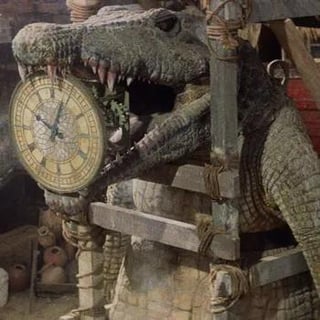
Captain Hook is a man of order and control. From his pristine pirate attire to his carefully timed war against Peter Pan, Hook thrives on structure. However, he is also shown to be deeply susceptible to the irrational. Nowhere is this more evident than in his obsessive fear of clocks. Early in the film, we see him destroy every timepiece brought into his lair. This isn’t just eccentricity—it’s foreshadowing. Hook fears clocks because they remind him of the crocodile that once swallowed a clock and took his hand. But more than that, clocks represent a loss of mental control. The tick-tock isn’t just a sound; it is a trigger.
In Neverland, belief is power. Children pretend food into existence. The Lost Boys train without real weapons, yet still improve their skills. Peter Pan rediscovers his ability to fly by reclaiming the emotional truth behind a happy thought. If positive imagination can create miracles, negative imagination can conjure nightmares. This is the psychological space Hook inhabits, and it is precisely what makes him vulnerable.
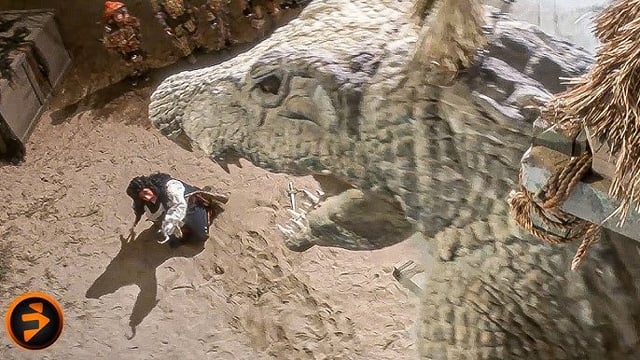
Hook’s desire to die by suicide is interrupted by Smee, but what we’re shown is Hook’s inability to commit fully to self-destruction. Why? Because his fear outpaces his will. He is not a man ready to die—he is a man haunted by the possibility of losing control. His final undoing comes not at the hands of Peter directly, but from within. During the climactic battle, Peter defeats Hook, but spares his life, humiliating him. In this moment of psychological vulnerability. Hook launches a surprise attack on Peter and it’s an attack of desperation, Tinkerbell blocks his hook and Peter slams into the croc, and remember that hook is deathly afraid of the croc and this is when he unravels in a moment of fear, some weird gases escape.
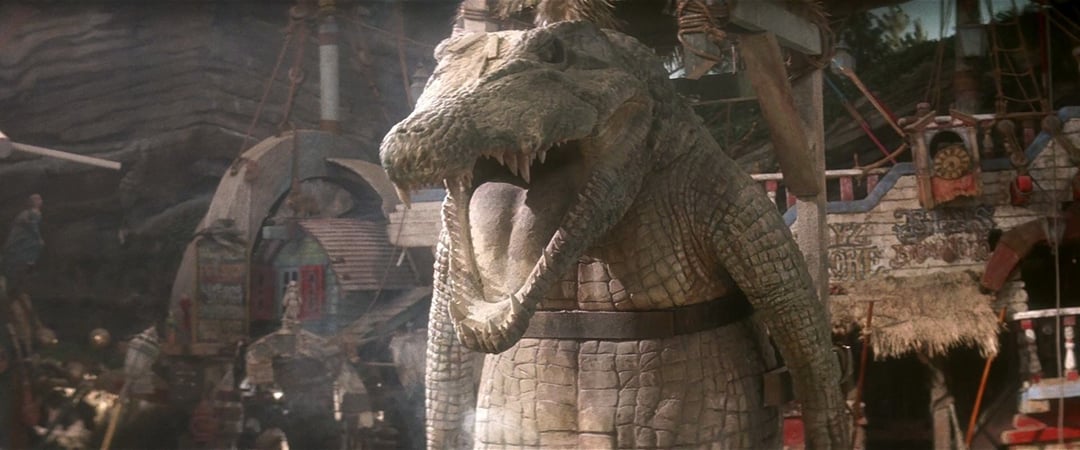
this is Neverland. And that crocodile is not alive. It is a taxidermied relic, long lifeless. So how does it move? The answer: Hook imagined it. In the heat of battle, shamed and vulnerable, Hook’s lifelong fear manifests into flesh. He loses control of his imagination, and it betrays him. Neverland gives physical form to belief, and Hook—trapped by his neuroses—materializes his worst nightmare.
This theory also aligns with his inability to control Jack, Peter’s son. Throughout the film, Hook attempts to brainwash the boy, using affection and games to sever Jack’s connection to his father. But the power of Jack’s belief in Peter becomes too strong. Hook cannot override it, and once again, imagination slips from his grasp. The same principle that allowed Hook to create illusions of control now works against him. His enemy is not Peter Pan—it’s belief itself.
In conclusion, Hook is a film about the emotional power of imagination, but it is also a cautionary tale. Captain Hook, a man whose mental fragility is masked by charisma and cruelty, is ultimately destroyed by the very magic of Neverland that he once tried to master. In this reading, Hook’s death is not caused by crocodilian resurrection—it is an act of self-destruction, born from a mind that could no longer control the reality it helped create
by Fun_Seat5809
1 Comment
Thanks ChatGPT