I just rewatched this movie a couple of days ago. It never gets old.
oneluv_hug on
That’s impressive for the first grab. Usually, takes me a few tries.
FeralGiraffeAttack on
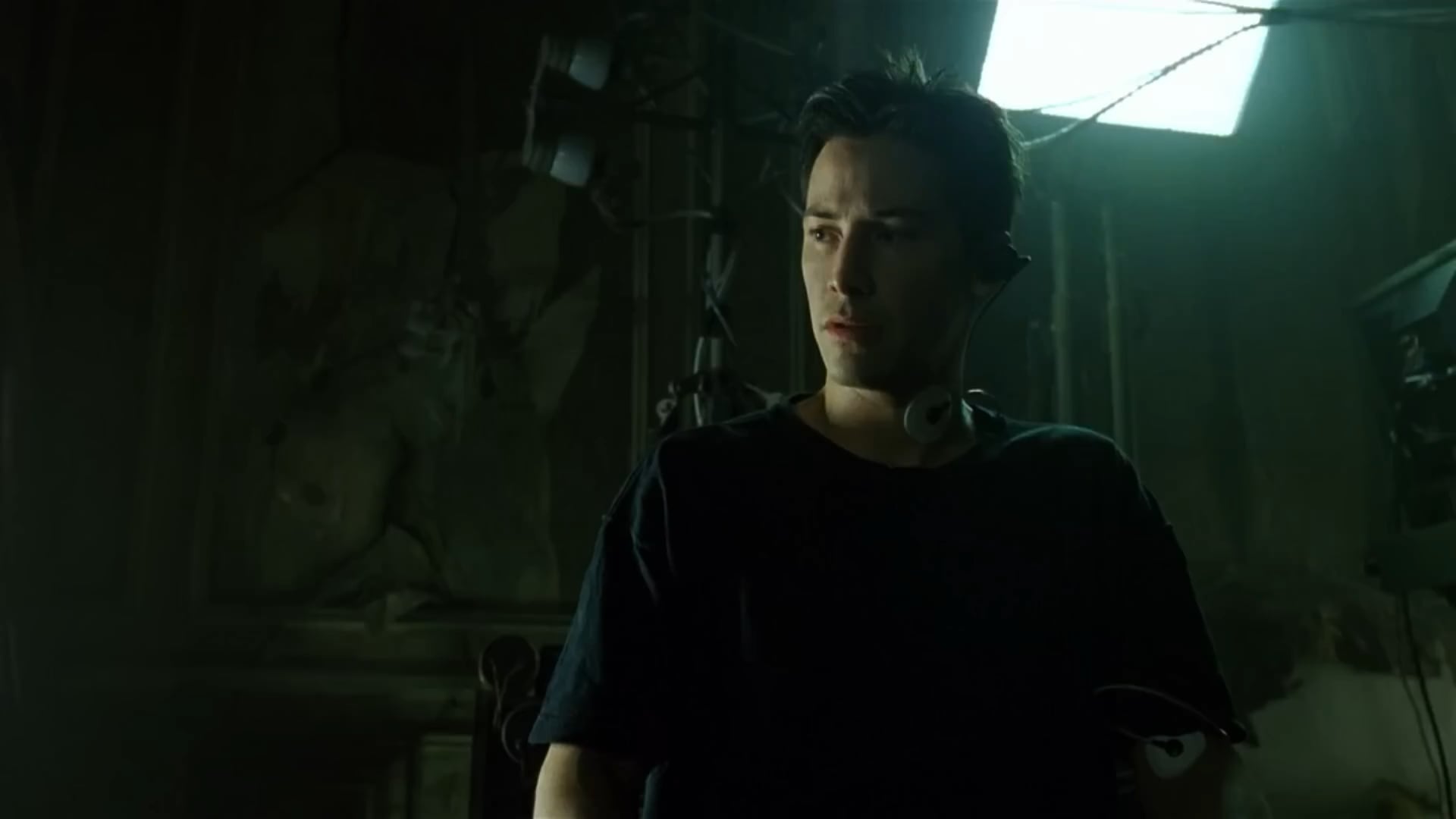
This scene is really fascinating from a philosophical perspective since it’s an idea that has been kicking around for hundreds (or arguably thousands of years) prior to the Matrix but needed a few iterations to reach the form we see here.
Around 375 BCE, Plato came up with the Allegory of the Cave in [Republic, Book Seven](https://web.sbu.edu/theology/bychkov/plato%20republic%207.pdf) as a metaphor for the journey from ignorance to enlightenment. There, the theorized of people dwelling in the darkness of an underground cavern, bound at the legs and neck so that they cannot move or turn their heads. They have no other memory of life, since they have been imprisoned in this way since childhood. Before them, they see only moving shadows that are cast by objects unknown to them, illumined by a flickering fire that we are told lies somewhere behind them. They know nothing of this except the shadows and hear only echoes from the voices of their keepers, whom they have never seen. Socrates (Plato’s student) then suggests that the shadows are, in fact, reality for the prisoners because they have never seen anything else; they do not realize that what they see are shadows of objects in front of a fire, much less that these objects are inspired by real things outside the cave which they do not see.
Later, in 1641, René Descartes published [Meditations on First Philosophy](https://personal.lse.ac.uk/ROBERT49/teaching/ph103/pdf/Descartes_1641Meditations.pdf) which theorized the “evil demon” thought experiment wherein, he grappled with the problem that arises once we acknowledge that it is possible that someone might have had (apparent) perceptual experiences and memories indistinguishable from our own that were induced by a powerful demon bent on deceiving this hapless subject.
It was the “Brain in a Vat” argument that served as one of the principal influences for the premise of the Matrix.
canteen_boy on
What a perfect movie. I’m surprised they never made any sequels. It’s probably for the best because you really wouldn’t want to fuck them up. That would be tragic.

5 Comments
Woah.
I just rewatched this movie a couple of days ago. It never gets old.
That’s impressive for the first grab. Usually, takes me a few tries.
This scene is really fascinating from a philosophical perspective since it’s an idea that has been kicking around for hundreds (or arguably thousands of years) prior to the Matrix but needed a few iterations to reach the form we see here.
Around 375 BCE, Plato came up with the Allegory of the Cave in [Republic, Book Seven](https://web.sbu.edu/theology/bychkov/plato%20republic%207.pdf) as a metaphor for the journey from ignorance to enlightenment. There, the theorized of people dwelling in the darkness of an underground cavern, bound at the legs and neck so that they cannot move or turn their heads. They have no other memory of life, since they have been imprisoned in this way since childhood. Before them, they see only moving shadows that are cast by objects unknown to them, illumined by a flickering fire that we are told lies somewhere behind them. They know nothing of this except the shadows and hear only echoes from the voices of their keepers, whom they have never seen. Socrates (Plato’s student) then suggests that the shadows are, in fact, reality for the prisoners because they have never seen anything else; they do not realize that what they see are shadows of objects in front of a fire, much less that these objects are inspired by real things outside the cave which they do not see.
Later, in 1641, René Descartes published [Meditations on First Philosophy](https://personal.lse.ac.uk/ROBERT49/teaching/ph103/pdf/Descartes_1641Meditations.pdf) which theorized the “evil demon” thought experiment wherein, he grappled with the problem that arises once we acknowledge that it is possible that someone might have had (apparent) perceptual experiences and memories indistinguishable from our own that were induced by a powerful demon bent on deceiving this hapless subject.
Then, in 1973, Gilbert Harman published [Thought](https://press.princeton.edu/books/hardcover/9780691645117/thought?srsltid=AfmBOop2VfA9dlX-TuUzjJ2QG0iRwdq-ViJJZJgZrBTusC60CXv9SAFQ) where he conceived the scenario known as the [“Brain in a Vat” Argument](https://iep.utm.edu/brain-in-a-vat-argument/) as a modernized version of the “evil demon” thought experiment draped in a more modern, technological lens.
It was the “Brain in a Vat” argument that served as one of the principal influences for the premise of the Matrix.
What a perfect movie. I’m surprised they never made any sequels. It’s probably for the best because you really wouldn’t want to fuck them up. That would be tragic.