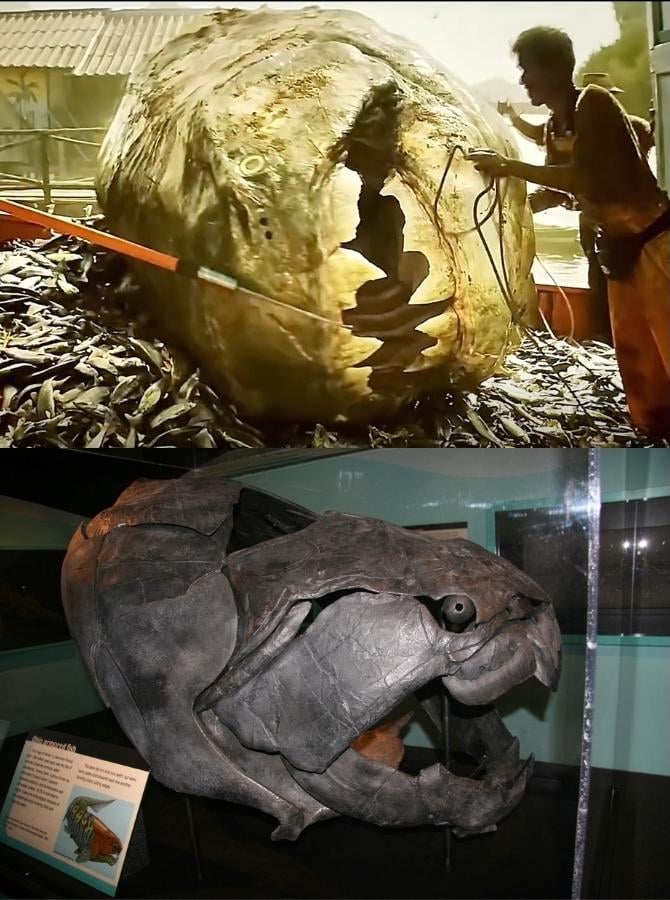
In Jurassic World: Rebirth (2025), fisherman pull up the cut off head of a Dunkleosteus. In real life, the head is the Dunkleosteus’ only recoverable fossil.
by Choosy-minty

In Jurassic World: Rebirth (2025), fisherman pull up the cut off head of a Dunkleosteus. In real life, the head is the Dunkleosteus’ only recoverable fossil.
by Choosy-minty
1 Comment
The Dunkleosteus was a jawed fish from the Devonian period. Its armored head and incredibly powerful bite force made it an apex predator at the time. The head / upper body is the only part of the Dunkleosteus that we have found because the upper body armor and jaws were made of bone; the rest of its skeleton was likely cartilaginous, and therefore much more difficult to fossilize. In the movie, the Dunkle appears for a couple seconds in a background scene; the head being the only part the fisherman pull up could be a reference to the real life paleontological history of the Dunkleosteus.
Alternatively, the rest of the body not appearing could be a way to avoid scientific inaccuracy. In the past couple of years, the theorized size and shape of the Dunkleosteus has dramatically changed (from the Dunkle being likely around 10 meters to around 3) as the method used for estimating its size is now diferent. There’s no definitive way to know what the rest of the body looked like; the movie could be trying to make sure they stay as accurate to the real life animal as possible.